Entrepreneurs often celebrate failure. Every How I Built This or autobiography from a wildly successful entrepreneur starts with the struggle that led to the big break, the path to riches littered with failed ventures along the way. In my entrepreneurial journey, I’m still in Part 1 of my podcast, but I’ve definitely collected a few lessons from failed attempts before we get to the big break.
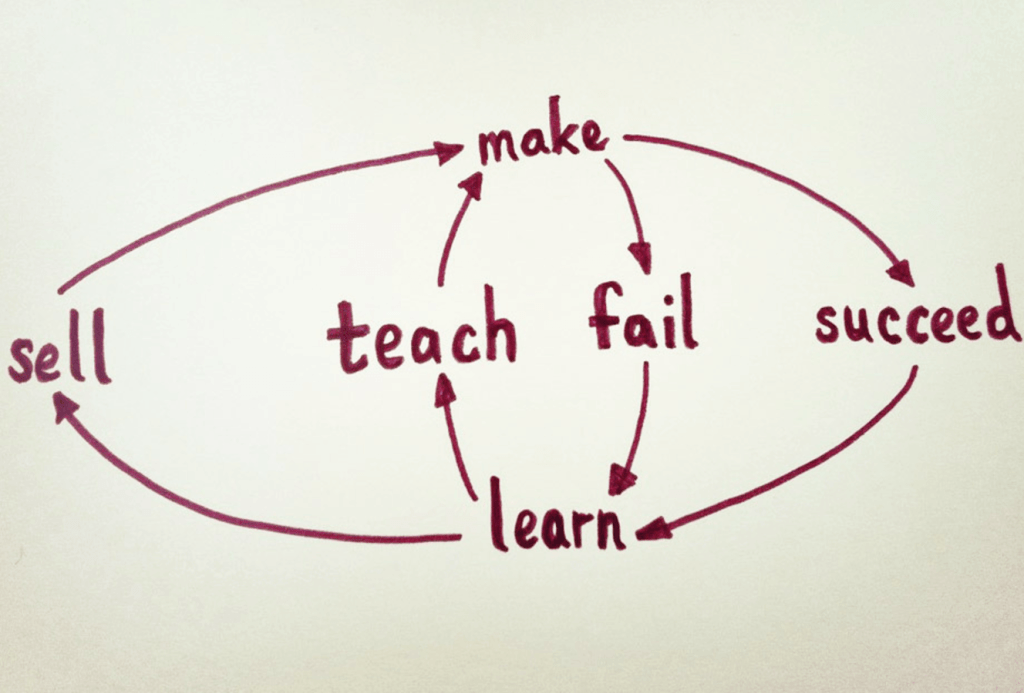
To provide a brief history lesson on my entrepreneurial career thus far, let’s start with Trippeze. What started as a school project in my senior year of college blossomed into a promising young “business.” I use quotes here because while we got a little bit of attention from the press and helped a couple hundred college students plan their study abroad travels, we never actually made any money, which I’m pretty sure is a prerequisite to graduate from “business” to business.
Along the way though, I learned some tough lessons about how to bootstrap a company, design a user experience, and manage a development team, all lessons I would take with me to my next venture: Quatro. With Trippeze, I was on my own and paying an offshore development team with what little budget I had available. Then when I launched and began to collect feedback, I couldn’t afford to build the necessary updates, and the product fizzled and died. When I launched, I assumed I would build the perfect product, attract enough users to convince a technical co-founder to join me, and we would be off to the races. Instead, I very quickly learned the value of agile iteration and the importance of starting with a technical cofounder.
Quatro, on the other hand, was built to last. I co-founded Quatro with two rockstars, one who could build the product of our dreams and another who could sell it. We spent years planning, building, and iterating, constantly talking to our early users and learning about their needs. Despite our best efforts, though, we never hit that rocket ship growth they talk about in Shark Tank. Unbeknownst to us, we were approaching a B2C company with a B2B mindset.
In between Trippeze and Quatro, I also managed to find success as a product manager at a B2B startup. When I accepted the job, I didn’t make a conscious decision to get into B2B vs B2C, but when it came time to leave that company and find my next venture, I found myself immediately disqualified from many jobs that I thought might be interesting for me. Why? Because apparently, as I built that product and solved problems for some of the biggest brands in the world, I put myself on a path to becoming a “B2B SaaS guy.” While I thought I was honing skills around internal communications, data analysis, prioritization, and all the other things a product manager has to do on a daily basis, hiring managers at B2C companies all over continued to tell me that my background, while impressive, did not fit exactly what they were looking for.
As frustrating as that was to hear, I also tended to agree with them. As a B2B SaaS guy, I know that my experience is different from someone who has spent most of their career developing consumer products. Yes, fundamentally the skills and responsibilities are similar, but the scales and types of problems are inherently different. B2C PMs are not getting pulled into client escalation meetings or dealing with Customer Success Managers with high priority feature requests from top paying customers, and B2B PMs are not finding trends in data from millions or hundreds of millions of users.
With a side project like Quatro, however, I thought I would be able to exercise my consumer-minded muscles. I would show all those hiring managers that they were wrong – I could build consumer products just as well as I could build business products. What I failed to take into account was the role a product plays in making a B2C sale.
Both business and consumer products need to be usable and solve a problem, but to find success in a B2B market, a product needs to show its Return on Investment to decision makers at the top of a department, and often has the help of a sales team. Consumer products, on the other hand, don’t have a sales team and rarely bring in new users through ROI. Instead, the most successful consumer products make their users look cool, which naturally motivates them to share the product, which naturally incentivizes others to use it so they, too, can look cool.
When I think about all the consumer apps I use on a regular basis – Venmo, Instagram, Twitter, Spotify, etc. – they all have something inherently viral built into their fundamental purpose. Whether it’s inviting your friends to send them money, tagging them in posts, sharing playlists, celebrating achievements, or competing in a game, the most successful consumer technology products all realize their full value when their users invite friends to join in. They all make their users seem cooler, better, or smarter in some way, and in doing so they incentivize others to join.
And that was my mistake – I thought if I could prove the ROI of using Quatro, prove that people who use Quatro simultaneously get more done and reduce their stress, that people would love it so much that they would tell their friends without any nudge from the product. And for some, I was partially right. The productivity junkies and people really looking to improve their personal processes loved the innovative take on productivity and continue to use Quatro today. But Quatro’s fundamental mission was to help our users take control of their time, and to do that, it needed to be very personal. As a result, we intentionally designed the product to avoid any sort of “task sharing” or collaboration flows. The results may have been good for stress levels, but it was not so great for user growth.
Today, I still believe in the mission, and still use Quatro every day to manage my own task lists. But I also know that if I ever want to break out of my B2B world, I’m going to have to move away from “personal efficiency” and toward “make the user look cool.” So now as we put development on hold for a while, I add this lesson to my files and continue down the entrepreneurial road, knowing that it’s just another chapter in the best How I Built This yet.
 Saft's Sanctuary
Leave a comment