I’ve built and shipped a lot of software over the last 10+ years. As a product manager and wannabe entrepreneur, I’ve launched all different types of features and updates, from B2C productivity apps and B2B event management platforms to optimizations on confirmation messages and hover states. But no matter how big or small those product releases might have been, they failed to prepare me for what went into self-publishing a novel.
The Similarities
Unlike publishing the novel, I found the writing process to feel quite similar to building SaaS products. Just as I have done so many times before in my product management career, I used an agile methodology to structure my writing journey, starting with a long-term vision, breaking that vision down into a roadmap, and executing on the plan.
Once I had a rough draft in place, it came time to start bringing on beta users, a group of ten friends who volunteered to read early drafts and provided invaluable feedback and notes.
And then, much like in software, I spent way too long pushing pixels. Every time I revisited the manuscript, I found something that could be improved, massaged, or tweaked.
But eventually, it came time for me to go pencils down. Time to push this work out into the world, to share my creation. And that’s where I began wading into uncharted territory.
The Differences
Once it’s out, it’s out
With software, it’s easy to avoid the trap of letting perfect be the enemy of good because there’s always an opportunity to come back and improve. Iteration is the name of the game.
So even if you’re not able to realize your full vision the first time around, it still makes sense to launch the product, get it in front of users, and start collecting as much feedback as possible as early as possible.
But when you’re publishing a book, you only get one chance. When I received my first “author’s copy” and started flipping through the pages, I was overwhelmed with a sense of pride and accomplishment.
Here it is. I wrote a fucking novel.
Until I made it to the last page and saw that the very last word in the book was spelled wrong.
In software, this type of thing would be no big deal. A quick hot fix to update the typo and no one will ever notice.
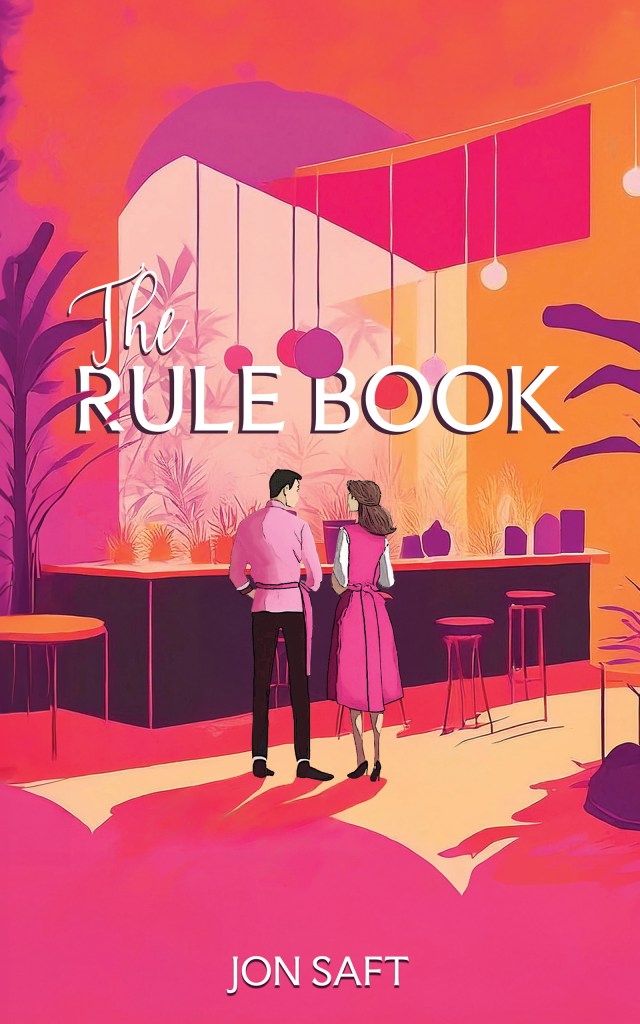
But with a book? Once someone has it in their hands, that’s it. No going back. Had I not caught this mistake, The Rule Book would have ended with “the missing piece to her puzzl” until the end of time.
The ultimate individual sport
Fortunately, I did catch that mistake before promoting the book or encouraging anyone to buy it, but it was a close call. Had that typo made it into the final version, it would have been pretty embarrassing for me. And for me alone.
Noticing that spelling error, I wanted so badly to share the burden, but I had no one to blame but myself. Whatever happens with this book – whether it reaches the New York Times best seller’s list or never goes beyond my mom’s book club – the responsibility will be all mine.
If it goes well, there will be no one to share the glory with. And if it completely flops, I’ll have to shoulder that disappointment alone.. When you’re building software, just like when you’re playing a team sport, it can be very reassuring to know that your teammates have your back. That you’re in it together, and will continue working together to improve. And when a product launches successfully, a product manager’s first instinct is to celebrate with the rest of the team.
But when I noticed that typo, I felt like a pitcher staring at a home run ball flying over the left field bleachers, alone on the mound, eager to get back and fix my mistake before anyone noticed.
Now what?
But unlike a pitcher in baseball or product manager in tech, I don’t have any more at-bats in this game. Yes, I was able to fix the typo before anyone else placed an order, but once all the typos had been fixed and tweaks had been tweaked, the publication announcement went out and sales started popping up.
Seeing people spend their money to buy something I created was an incredible feeling, and one that I will remember forever. But once the initial excitement died down, the next question was a difficult one to answer.
Now what do I do?
With software, the initial launch is just the beginning. That’s when the fun begins. From there, feedback starts rolling in and iterations can start. The full vision starts to become a reality.
But with this book, I have no intentions of writing a sequel. There will be no The Rule Book 2.
Instead, I simply have to go back to the drawing board to see what other creative inspiration lies dormant, ready to be unleashed.
What’s the GTM strategy?
But until I come up with my next Great Big Idea, I’ve been spending my time trying to figure out how to get anyone who isn’t related to me to read this thing.
As a product manager, I’ve learned certain playbooks that have proven to be very successful over the years. Ways to make a product inherently viral, to promote a new feature in ways that make the value very obvious throughout a potential user’s product experience.
But a book can’t be inherently viral. I can’t add an incentive to share to the user journey, can’t increase the value based on the number of people who read it.
To the contrary, convincing someone to read a book comes with a much higher barrier to entry than acquiring a new SaaS user. For a new product, I can offer all types of free trials or sneak peeks to entice usage. But no matter what I do, this book is going to cost a minimum of $9.99 to get into a reader’s hands.
The shameless plug
Despite all the challenges, though, I was able to figure it out. The book is out there, and people are starting to read it. Reviews are starting to appear on Amazon.
It’s all happening.

So if you’ve gotten this far, here it comes, the shameless plug you’ve been waiting for.
Go check out my new book on Amazon!
Ultimately, I didn’t write this novel to end up on any best seller’s list, or to find a new career. I’m a product manager, and I’m going to stick to my day job.
But if this book inspires even one person to go off and do their own thing, to write their own book or pursue whatever their dream might be, then it will have all been worth it. And if anyone actually does pick it up and finds the words inspiring enough to stop worrying so much about the “right way to live life,” or to feel better about figuring things out as they go, then I will officially consider it a success.
 Saft's Sanctuary
Leave a comment